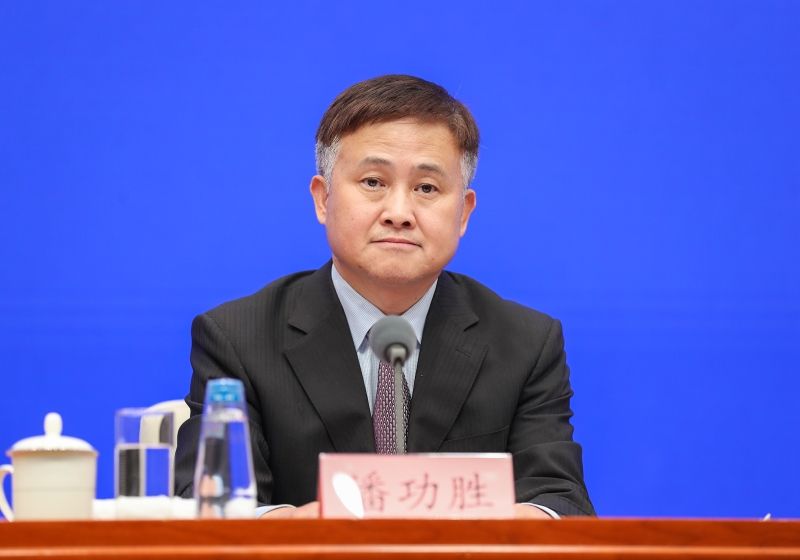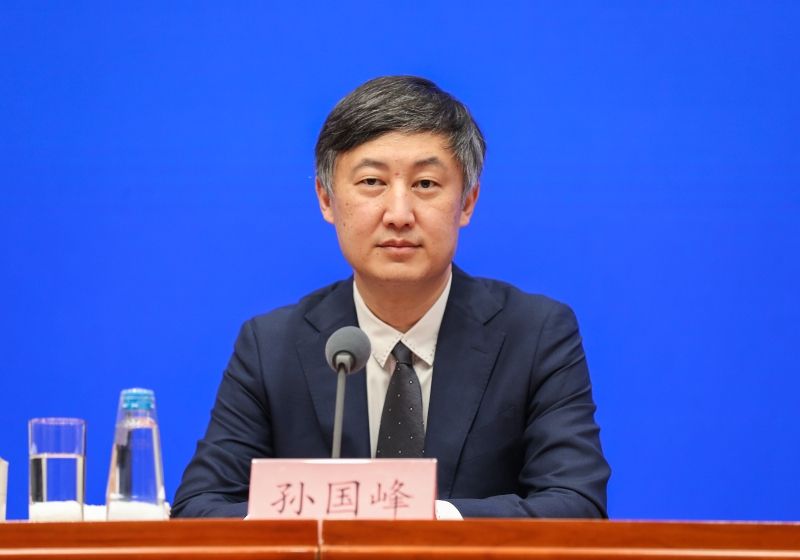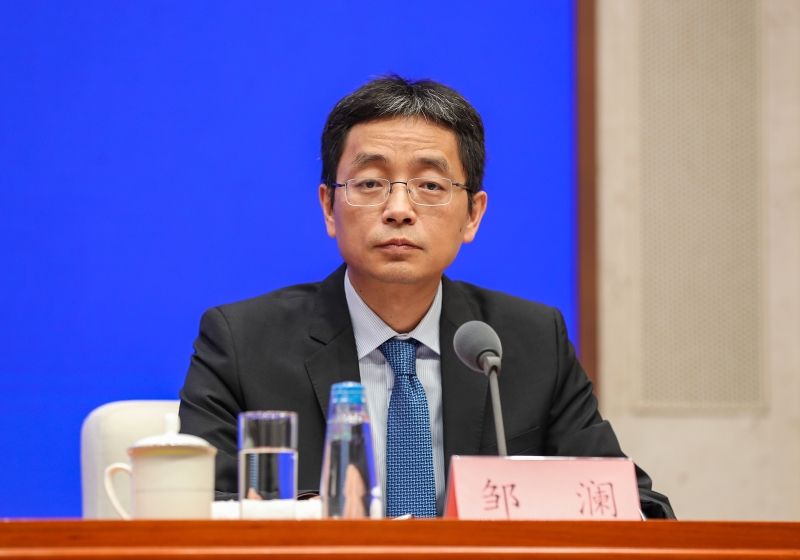

The State Council Information Office held a regular policy briefing on September 7, 2021. Pan Gongsheng, Deputy Governor of the People’s Bank of China (PBC) and Administrator of the State Administration of Foreign Exchange (SAFE), and officials from Ministry of Industry and Information Technology briefed on supports for the development of micro, small and medium-sized enterprises (MSMEs), and answered questions from the press. The transcript is as follows.
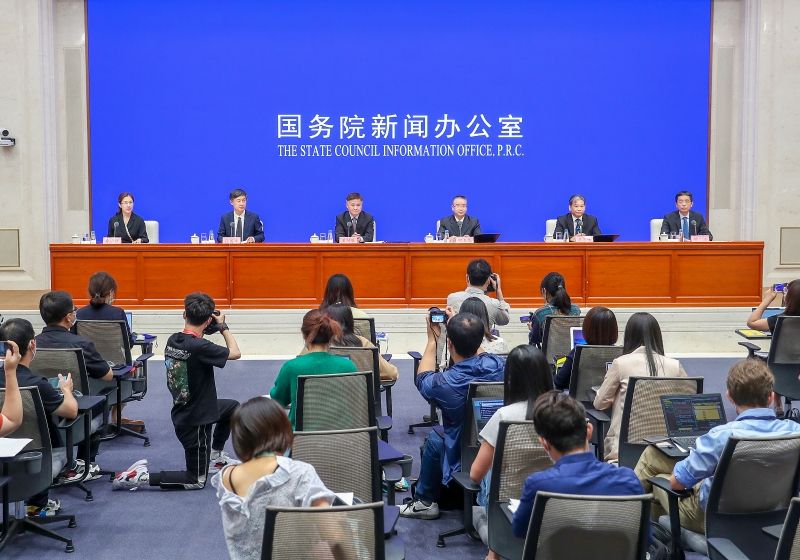
Pan Gongsheng, PBC Deputy Governor and SAFE Administrator: Good afternoon, friends from the press. It is a pleasure to attend today’s policy briefing of the State Council. First of all, on behalf of the PBC and SAFE, I would like to thank you for your sustained interest in and support for the financial sector. The State Council executive meeting on September 1 put forward further requirements for extending financial support to MSMEs. In today’s briefing, I will introduce the progress we have made in this regard.
The CPC Central Committee and the State Council attach great importance to ensuring stability on six fronts and maintaining security in six areas, and regard the development of MSMEs, which are large in number and wide in scope, as a top priority in this respect. Since the beginning of 2021, the PBC has earnestly implemented the decisions and arrangements of the CPC Central Committee and the State Council. Under the direct command of the Financial Stability and Development Committee (FSDC) under the State Council, the PBC has ensured a sound monetary policy that is flexible, targeted, adaptive and appropriate to keep liquidity adequate at a reasonable level. We continued to implement the two monetary policy instruments enabling direct support for the real economy and carried out the project of enhancing commercial banks’ capability to provide financial services for MSMEs. Micro and small business (MSB) financing has maintained a trend of “increased volume, expanded coverage and lowered price” and corporate financing has become significantly more convenient. At end-July 2021, outstanding inclusive MSB loans recorded RMB17.8 trillion, a year-on-year increase of 29.3 percent. A total of 38.93 million MSB entities enjoyed financial support, a year-on-year increase of 29.5 percent. In July, the interest rate on new inclusive MSB loans was 4.93 percent, down 0.15 percentage points from the end of last year.
At present, bolstered by stronger growth momentum, China’s economic recovery continues to gather pace. However, the recovery is still unstable and unbalanced amidst the evolving global pandemic and ever more complex external environment. The high prices of raw materials have led to practical difficulties and problems for MSMEs such as rising production and operating costs and increasing accounts receivable, which are compounded by the impact of the pandemic and other disasters.
Next, the PBC will continue to hold fast to the Two Unwavering Commitments. The PBC will work with relevant authorities to properly implement the existing preferential policies for enterprises, further strengthen policy incentives and constraints, encourage innovations of financial products and services, improve internal resource allocation and policy arrangements of financial institutions, and optimize the financing environment, thus constantly improving financial services for MSBs and supporting the development of MSMEs.
Thank you!
CCTV, China Media Group: Compared with last year, what are the new features of financing for small and medium-sized enterprises (SMEs) since the beginning of 2021? And what progress has been made in implementing relief policies for SMEs? Thank you.
Pan Gongsheng: Since the beginning of this year, the PBC has earnestly implemented the decisions and arrangements of the CPC Central Committee and the State Council, and kept liquidity adequate at a reasonable level in the banking system. We have continuously implemented the two monetary policy instruments enabling direct support for the real economy and enhanced commercial banks’ capability to provide financial services for MSMEs. The PBC has urged banks to further improve their internal resource allocation and assessment and incentive mechanisms and to strengthen support for enterprises in key areas and sectors. In general, the banks' capacity of providing financial service has been continuously improving, and there has been growing financing support for MSMEs. Here, I would like to brief you on the progress in five aspects.
First, the aggregate money and credit increased reasonably. The August data is yet to be released, but at end-July, the outstanding aggregate financing to the real economy (AFRE) was RMB302 trillion, a year-on-year increase of 10.7 percent, while broad money supply (M2) recorded RMB230 trillion, a year-on-year increase of 8.3 percent. The growth rates of the two indicators are roughly the same as those before the pandemic and basically in line with the nominal GDP growth. From January to July this year, RMB loans increased by RMB13.8 trillion, up by RMB758.2 billion compared with the same period last year.
Second, MSB financing witnessed “increased volume, expanded coverage and lowered price”. At end-July, outstanding MSME loans recorded RMB72.4 trillion, accounting for 65.7 percent of total corporate loans. Among them, outstanding inclusive MSB loans was RMB17.8 trillion, a year-on-year increase of 29.3 percent. A total of 38.93 million MSB entities enjoyed financial support, a year-on-year increase of 29.5 percent. In July, the interest rate on new inclusive MSB loans was 4.93 percent, down 0.15 percentage points from the end of last year.
Third, the two monetary policy instruments enabling direct support for the real economy have produced notable results. The two policy instruments were launched by the PBC in June last year. The first is the deferment of principal and interest payments for MSB loans and the second is the unsecured inclusive loan support for MSBs. I once briefed friends from the media on the two instruments after they were launched. From 2020 to the end of July this year, the deferred repayments implemented by the banking financial institutions nationwide have totaled RMB12.5 trillion, of which 10.2 trillion were for MSMEs. Since June last year, a total of RMB6.1 trillion unsecured inclusive MSB loans have been issued, accounting for 29 percent of the inclusive MSB loans issued accumulatively during the period, up 8 percentage points from that before the implementation of the two policy instruments.
Fourth, MSME financing has become significantly more convenient. The PBC has established and improved the policy framework and infrastructure for supply chain financing, upgraded the platform for receivables financing, and built a platform for supply chain bills, speeding up the circulation of accounts receivable for MSMEs. In the first half of this year, the platform for receivables financing processed a total of 20,000 MSME financing deals, totaling RMB629.1 billion, an increase of 40 percent and 10 percent year on year respectively. The SAFE has established a blockchain service platform for cross-border finance to support foreign trade enterprises. At end-July, 8,343 foreign trade MSMEs had benefited from the platform, raising over USD100 billion in total.
Fifth, the support for key industries and areas has been continuously enhanced. A directory database has been established, covering 420,000 enterprises and core enterprises in the supply chain that are affected by the COVID-19 pandemic. This facilitated the issuance of RMB7.1 trillion loans and helped create more than 30 million jobs. At the same time, the PBC, in collaboration with relevant authorities, has intensified financial support for enterprises in various sectors, including aviation, culture and tourism, accommodation and catering, retail, and foreign trade. The PBC has further optimized the credit structure and guided commercial banks to increase credit supply in the fields of green development, technological innovation, and manufacturing, especially MSMEs. Meanwhile, RMB200 billion of newly-added central bank lending quota was given to ten regions with slow credit growth, including the provinces of Liaoning, Jilin and Heilongjiang, preliminarily reversing the long-term slow credit growth in these areas.
Above are the current situation, developments and results of these five aspects that I would like to share with you. Thank you.
China Business News: As we can see, MSMEs are still facing many difficulties in their development. The State Council executive meeting on September 1 proposed to intensify support for MSMEs. Could you please elaborate on the specific arrangements in the financial sector? Thank you.
Pan Gongsheng: On September 1, the State Council executive meeting conducted a special study, during which the PBC made a report. Next, we will enhance policy support on the basis of the existing preferential policies for enterprises, especially the financial support policies for MSMEs. The support will be provided in the following ways.
First, an additional RMB300 billion of central bank lending for MSMEs will be issued over the coming four months of the year, that is, from September to December this year. The interest rate of central bank lending which are provided by the PBC to commercial banks is 2.25 percent. Commercial banks will mainly grant the funds to MSBs at rates around 5.5 percent on average. At the same time, we have adopted the reimbursement approach, i.e., the commercial banks will apply for central bank lending after granting MSB loans, to ensure that the funds are well-targeted and directly reach the targets.
Second, the PBC will step up the implementation of the support policy for inclusive MSB loans. Originally released in June 2020 for SMEs in response to the COVID-19 pandemic, the policy is still in place. Based on the support policies for inclusive MSB loans as approved by the State Council last year, the PBC will continue to make better use of the funds released by central bank lending, and guide banks to issue more inclusive MSB credit loans.
Third, financial institutions and local governments will join hands to bring into play the role of local government-backed financing guarantors. Local governments have set up a number of financing guarantors whose main function is to provide credit enhancement and guarantee for MSB financing. In this regard, the PBC will mainly focus on expanding the coverage of government-backed financing guarantee and lowering the rates of financing guarantee.
Fourth, the PBC will make innovations efforts to improve the patterns of supply chain financial services and address capital turnover difficulties of MSMEs due to occupied accounts receivable. According to our analysis, when MSMEs run into troubles, one problem is that the amount of their accounts receivable has grown quite quickly for some time. So, how to address the MSMEs’ problem of having their capital tied up in the hands of medium and large-sized enterprises? At the macro level, to maintain a stable financing environment, the PBC will work with relevant authorities to urge medium and large-sized enterprises to repay their accounts payable and abide by payment disciplines in the market. From the financial perspective, we will encourage more core enterprises in the supply chain to get access to the platform for financing receivables, fulfilling the platform’s function of accounts receivable ation. The PBC will also guide financial institutions to issue supply chain credits based on the information of the MSMEs in the supply chain, including their contracts and logistics. On the basis of promoting the implementation of the Regulations on Ensuring Payments to Small and Medium-Sized Enterprises, we will encourage large enterprises to replace the various forms of accounts payable with commercial bills, guide institutions to finance with discounted bills and standardized commercial papers, and extend further support through central bank discounting. These efforts are expected to alleviate the pressure from funds taken up for MSMEs.
Fifth, the PBC will enhance financial service capacity building for MSMEs. Two years ago, the PBC launched the project on enhancing commercial banks’ capability to provide financial services for MSMEs. As its name suggests, we define the work as a project. From the perspective of supply-side reform of the financial sector, how to enhance the capacity of financial institutions to provide financial services for MSMEs is a core task. It consists of internal resource allocation, performance appraisal, risk assessment, due diligence, liability exemption, and Fintech application of commercial banks. Let’s take the appraisal of financial inclusion of commercial banks as an example. The appraisal of branches by headquarters and that of sub-branches by branches of commercial banks are all conducted according to a set of appraisal measures, which requires them to assign a certain weight to inclusive finance. In terms of internal transfer pricing, the rate on inclusive MSB loans should be set at a preferential level.
Furthermore, the PBC will continue to leverage the synergy among authorities of fiscal affairs, industry and information technology, and taxation, as well as local governments, to further boost market demand, stabilize commodity prices, and bring down the operating costs of MSMEs. Also, we will improve the credit risk sharing and compensation mechanism and the credit information sharing mechanism, to improve the efficiency of financial services for MSMEs.
Thank you.
Bloomberg: Though the State Council executive meeting has announced to increase another RMB300 billion worth of central bank lending quota for MSMEs, the base money gap remains large within the year. What kind of monetary policy tools will the PBC use to fill in the liquidity gap? What measures will the PBC take to achieve the goal of common prosperity? How will the increase in central bank lending quota impact other policy tools, such as the required reserve ratio (RRR) or interest rates?
Pan Gongsheng: Thank you for the questions. I would like to invite my colleagues Sun Guofeng, Director-General of Monetary Policy Department of the PBC and Zou Lan, Director-General of Financial Market Department of the PBC to answer your questions. They are both financial experts. Now I will give the floor to Director-General Sun Guofeng.
Sun Guofeng, Director-General of Monetary Policy Department of the PBC: You mentioned that there is a large base currency gap. I don’t think there is such a problem. Since the beginning of this year, the PBC has implemented a sound monetary policy and adopted a mix of monetary policy tools such as a required reserve ratio (RRR) cut, central bank lending, medium-term lending facility (MLF) and open market operations (OMOs) to increase base money, which makes monetary policy more forward-looking, effective and precise, and keeps liquidity adequate at a reasonable level. One key indicator of liquidity is the 7-day interbank pledged repo rate (DR007) in the money market. Looking at the DR007, the money market was stable without any significant fluctuations at the end of the months and quarters. Its deviations from the 7-day OMO reverse repo rate were low compared with the same period of recent years. The DR007 averaged 2.15 percent in August, 5 BPs lower than that of the 7-day reverse repo rate, which is quite close. After the RRR cut in July, financial institutions repaid part of the MLF loans with the long-term funds released from the cut, and their liquidity demand was sufficiently satisfied. In the next few months, the supply and demand of liquidity will remain balanced on the whole without large gaps or significant fluctuations.
The PBC has sufficient tools to smooth disturbances in liquidity caused by factors such as fiscal revenue and expenditure and the issuance and payments of government bonds, so as to keep liquidity adequate at a reasonable level. Notably in recent years, the PBC has improved regulatory frameworks for liquidity and market interest rates, increased transparency, and stabilized market expectations through coherent operations and expectation management, which has effectively lowered the precautionary demand of financial institutions for liquidity. Thus, the total liquidity needed to ensure stable operations of the money market has been continuously reduced. In other words, under current situations, we may not need as much liquidity as before to keep money market interest rates stable. Under these circumstances, it is inappropriate to judge liquidity conditions simply by the liquidity of the banking system or the excess reserve ratio. The most important indicators of liquidity are the market interest rates, especially DR007. Thank you.
Pan Gongsheng: With respect to the question about common prosperity, the PBC’s financial policy and monetary policy have a great role to play in the pursuit of common prosperity. Take poverty alleviation, one of China’s three critical battles, for example. General Secretary Xi Jinping announced early this year that China has secured a complete victory in the fight against poverty. The PBC has led work related to providing financial support for poverty alleviation and I was the person in charge in the past few years. The financial system has invested a lot of resources in the fight against poverty and played an important part in this regard. At the national conference to review China’s fight against poverty, General Secretary Xi noted that 9.2 trillion yuan of targeted poverty alleviation loans were issued, including micro loans to impoverished households, loans for poverty alleviation through industrial development and loans for infrastructure projects in impoverished areas. Therefore, financial support for poverty alleviation has made major contributions to winning the battle against poverty. This is just one of the stories I draw from my work experience. In fact, the PBC has made broader contributions in eradicating poverty with the use of the financial policy and monetary policy.
Now I would like to give the floor to Mr. Zou Lan, Director-General of Financial Market Department of the PBC.
Zou Lan, Director-General of Financial Market Department of the PBC: Let me add a few words. Aside from poverty alleviation, we still have lots of work to do in terms of providing financial support for common prosperity in the next stage. For example, we will refrain from indiscriminate liquidity stimulus, properly implement monetary policy and keep the RMB value stable, which is essential for achieving common prosperity. We will further balance the financial support for the development of different regions, and ensure effective central bank lending policy in provinces with slow credit growth. We will enhance financial support for key fields and weak links, including the aforementioned measures to facilitate MSME financing and the arrangements we made lately at a teleconference with the Ministry of Agriculture and Rural Affairs (MARA) and the China Banking and Insurance Regulatory Commission (CBIRC) to consolidate and expand the poverty alleviation achievements and promote the rural revitalization strategy. We will continue to develop inclusive finance by promoting the building of the rural credit system, improving the rural payment service environment, enhancing financial knowledge publicity and education, and stepping up the protection of financial consumers’ rights and interests, so that the general public can equally enjoy modern financial services in a secure way. We will promote the steady and sound development of the real estate market, uphold the principle that “housing is for living in, not for speculation,” ensure sound implementation of prudential management in real estate finance, and enhance financial support for the rental housing market. We will promote the regulated and sound development of various types of capital and prevent their disorderly expansion. Similar examples can go on and on.
To sum up, the PBC will earnestly implement the major decision of the CPC Central Committee on promoting common prosperity while pursuing high-quality development, uphold the underlying principle of pursuing progress while ensuring stability, maintain the stability of macro policy, provide vigorous financial support for achieving common prosperity, and hold the bottom line that no systemic financial risk should occur.
Thank you.
Nihon Keizai Shimbun: To alleviate MSBs’ difficulties in capital chains, the PBC announced a RRR reduction on July 15. How do you look at the effects of this decision? What’s your view on the costs MSBs face following the RRR reduction? Thank you.
Sun Guofeng: Thank you for your question. The RRR reduction in July released RMB1 trillion long-term funds, which effectively expanded the sources of long-term funding of financial institutions to support the real economy, and encouraged financial institutions to proactively make use of the funds to boost support for MSBs. In addition, the RRR reduction reduced the funding costs of financial institutions by around RMB13 billion, which, through the transmission of financial institutions, contributed to keeping the overall financing costs for MSBs stable with a small decline. The effects of the RRR reduction in July are gradually unfolding with increased volume and lowered prices of MSB loans. As of end-July 2021, inclusive MSB loans issued by financial institutions increased by 29.3 percent year on year, and the weighted average interest rate on newly issued inclusive MSB loans was 4.93 percent in July, 0.15 percentage points lower than that of last December. The PBC will continue to guide financial institutions to use the funds released from the RRR reduction to support MSBs.
The costs for MSBs include factor costs such as labor and raw materials, and financing costs. There have been a lot of discussions about them. Commodity price rise has a great impact on some MSBs that are labor intensive and sensitive to raw material prices but with little bargaining power. This calls for our close attention, and we will provide greater policy support.
Next, I would like to focus on funding costs. This year, the PBC has adhered to sound monetary policies. We kept market liquidity adequate at a reasonable level, and maintained reasonable monetary and credit growth. The loan prime rate (LPR) reform has deepened, and the regulation of deposit rates has been optimized. The method for determining the self-regulatory ceiling of deposit rates were adjusted, so that now it is determined by adding a few basis points to benchmark deposit rates. This has helped establish a much more orderly competition of the deposit market. In July this year, the interest rates of current and term deposits in financial institutions registered 0.32 percent and 2.26 percent, on par with and 0.22 percentage points lower than those in May respectively prior to the adjustment. Greater drops of 0.41 and 0.42 percentage points were witnessed in the three-year deposit rate and five-year deposit rate, respectively. These reforms are continuously producing effects, and have contributed to keeping the actual lending rates stable with a small decline. In the first seven months of this year, the average weighted lending rate stood at 5.07 percent, down 0.08 percentage points year on year. Specifically, the average weighted corporate lending rate was 4.63 percent, down 0.14 percentage points year on year. A greater decline was seen in the lending rates for MSBs. In general, as the measures are gradually unfolding their effects, the financing costs of MSBs have been stable with a decline, which has effectively supported their operation and development.
Thank you.
Phoenix TV: I also have a question about the monetary policy. As there are possibilities of shifts in the monetary policies of global economies, is it possible for China to shift its monetary policy? What is the PBC’s consideration of this? Thank you.
Pan Gongsheng: Since the outbreak of COVID-19 in Q1 last year, major developed economies have adopted intensive quantitative easing monetary policies and substantially expanded their central banks’ balance sheets. In less than one year and a half from March 2020 to end-July 2021, the Fed’s balance sheet doubled from USD4 trillion to USD8.2 trillion. Since the beginning of this year, the US has witnessed marked inflation with improved employment. Several Fed officials have spoken publicly recently and sent signals about how to exit QE monetary policies. Not long ago, at the annual Jackson Hole Economic Policy Symposium, where global central bankers convened, the Federal Reserve Chair Jerome Powell delivered a speech and showed a clearer path of shifts in the US monetary policy in the future. Not only the US, but other economies are facing the issue of monetary policy shifts as well. As for China, we have been sticking with a sound monetary policy. It is still within the range of normal monetary policies and we won’t adopt indiscriminate massive liquidity stimulus. There is still ample policy space, which has been a major difference from the monetary policies of the Fed or other major economies since the beginning of 2020.
In the next step, the PBC will implement a sound monetary policy, keep liquidity adequate at a reasonable level, and ensure that the growths of money supply and AFRE are generally in line with the nominal GDP growth. We will ensure sound design of the inter-temporal policies and align this year and next year’s monetary policies in a coordinated manner. Meanwhile, we will prioritize domestic situations in making monetary policy decisions and enhance the independence of monetary policies. As for structural monetary policies, support for key fields and weak links will be intensified. For example, instruments such as central bank lending and central bank discount will be applied to provide targeted support. The two monetary policy instruments enabling direct support for the real economy will be further implemented, and the additional RMB300 billion central bank lending commitment proposed by the State Council executive meeting to support MSBs will play its role. Moreover, the PBC will set up a support instrument for carbon emission reduction projects, and encourage financial institutions to increase support for key fields and weak links such as MSMEs, green development, and sci-tech innovation in a targeted manner.
To answer your question, I have briefly talked about the development of monetary policies in major economies worldwide, as well as China’s current monetary policy and its future orientation.
Sun Guofeng: I would like to add some points. This year, our inter-temporal monetary policies have been well-designed, and we made plans and arrangements in advance, so that the possible negative spillover impact from the monetary policy adjustments of global economies was reduced.
First, we have raised financial institutions’ RRR for foreign currency deposits, enhanced expectation management, and guided enterprises and financial institutions to be risk-neutral, so that the RMB exchange rate has been basically stable at an adaptive and equilibrium level and the potential impacts from the monetary policy shifts of developed economies on the exchange rates in China have been reduced.
Second, we have enhanced macro-prudential management of cross-border capital flows, and lowered the macro-prudential adjustment parameter for cross-border financing, so as to ensure stable external debts and alleviate the burden of external debt repayment for enterprises resulted from monetary policy shifts of developed economies in the future.
Third, our monetary policy has become more independent. In early July, we lowered the RRR in a forward-looking manner, which released RMB1 trillion long-term funds, and kept liquidity adequate at a reasonable level. These measures prepared us for the uncertainties of the economic performance in the second half of the year and the potential monetary policy adjustments of developed economies.
Fourth, the domestic LIBOR transition has been advanced in an orderly manner. We have guided financial institutions to prepare ahead for the transition, in case of combined risks posed by the change in the financial market’s benchmark rates due to the exit of LIBOR, and by the monetary policy shifts of Fed and other developed economies.
Pan Gongsheng: Director-General Sun mainly talked about the changes in the international economy and the financial market environment, as well as potential monetary policy adjustments of major economies. In fact, the PBC has planned ahead and already made some policy arrangements. Thank you.